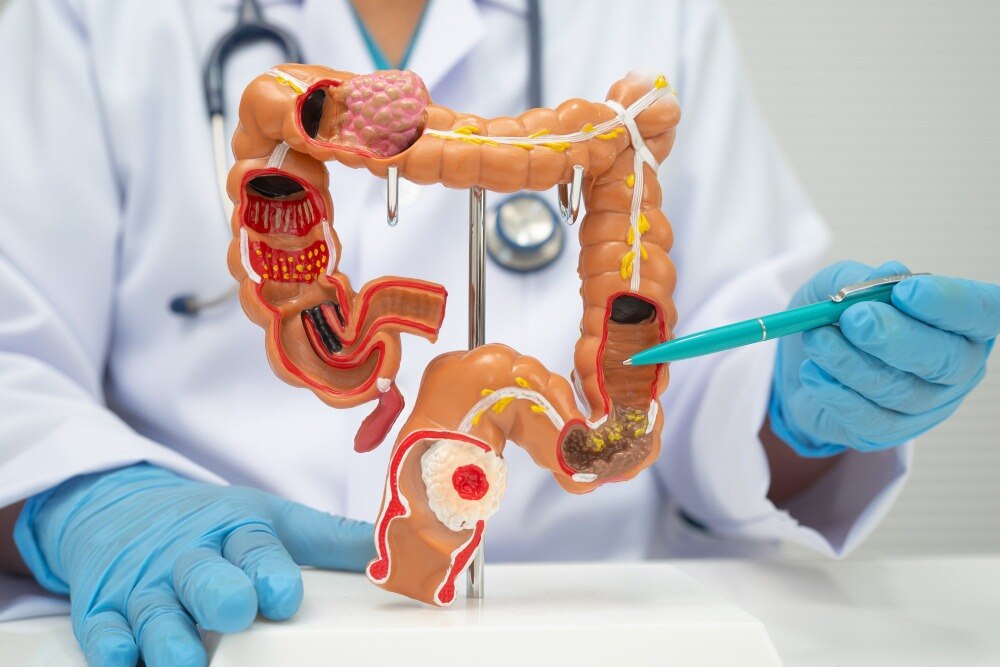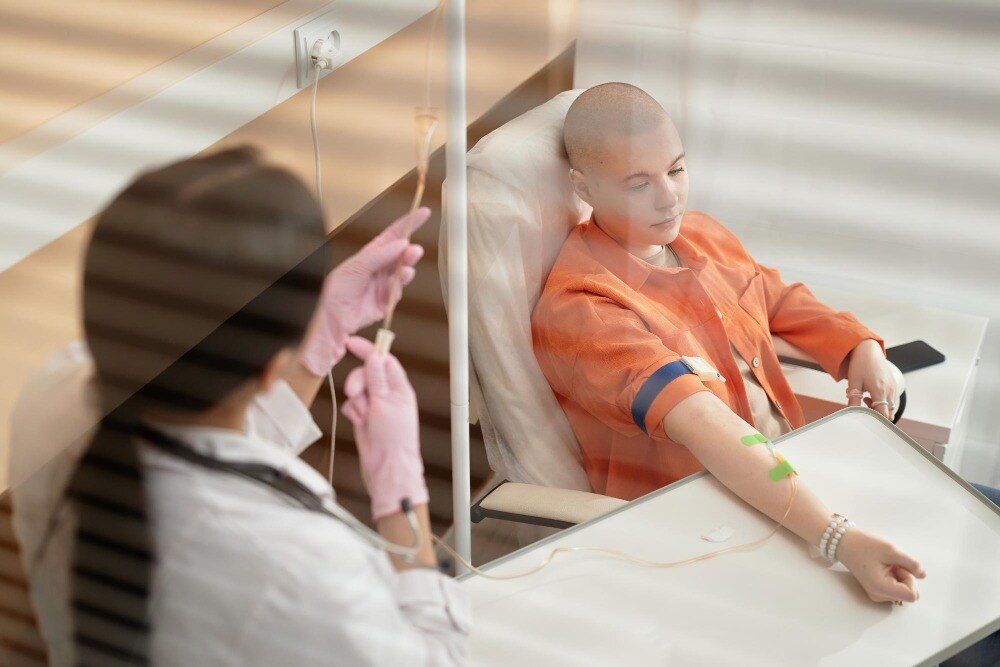

A cancer diagnosis identifies where a tumour began, but it does not show every molecular change driving its growth. By the end, you will know how doctors find those changes, distinguish a useful treatment target from an incidental finding, and judge what a targeted drug can realistically achieve.
Key takeaways
- Ask which biomarker or tumour change supports the proposed targeted treatment.
- A mutation, biomarker and treatment target describe different parts of the testing process.
- A matching target does not guarantee response because tumours can resist treatment.
- Report new symptoms promptly and ask when repeat biomarker testing is needed.
What change in a cancer cell gives a drug something to target?
A drug has something to target when a cancer-cell change creates a protein, signal, or surface feature that the tumour depends on. The change can make cells divide continuously, avoid cell death, invade tissue, or recruit blood vessels.
- A mutation can switch a growth-control gene permanently on, as an EGFR or BRAF mutation can do.
- A gene amplification produces extra copies of a gene, raising the amount of its protein; HER2 amplification can increase growth signalling.
- A gene fusion joins parts of two genes and creates an abnormal driver protein, as with an ALK fusion.
- Protein overexpression places unusually large amounts of a receptor on the cell surface, giving growth signals more opportunities to act.
- Other alterations can remove a brake on division, change DNA repair, or reshape the tumour environment.
Targeted drugs interrupt the resulting weakness rather than simply attacking every rapidly dividing cell. A small-molecule inhibitor can enter the cell and block an overactive kinase; an antibody can block a surface receptor or a blood-vessel signal. An antibody-drug conjugate can bind a cancer-associated protein and deliver a toxic payload.
The alteration must be present and relevant: finding it does not guarantee response, because another pathway can drive the tumour or resistance can emerge.
How do doctors test a tumour for a treatment target?
Doctors begin with a tumour biopsy: tissue removed by needle, endoscopy or surgery. Histopathology examines the cells under a microscope, confirms cancer, and describes its type and grade. The same sample can then undergo biomarker testing for DNA, RNA, proteins or chromosome changes.
- Immunohistochemistry detects proteins, such as HER2, oestrogen receptors or PD-L1, on cancer cells.
- Polymerase chain reaction (PCR) detects a specific DNA or RNA change, including a known mutation or fusion.
- Fluorescence in situ hybridisation detects gene amplification, deletion or rearrangement inside individual cells.
- Next-generation sequencing reads many genes at once and can identify mutations, amplifications, fusions and sometimes resistance-related changes.
- Liquid biopsy analyses circulating tumour DNA in blood when tissue is unsafe, difficult to reach or insufficient.
A blood test cannot replace tissue in every situation. Low circulating tumour DNA, a tumour site that sheds little DNA, or limited test sensitivity can produce a false-negative result. A tissue sample can also miss a different cancer subclone elsewhere, so doctors may repeat testing when the cancer progresses.
Specimen quality changes reliability: too little tumour, extensive dead tissue, poor preservation or treatment-damaged cells can prevent a result. Location matters because a deep lung, brain or bone lesion may be harder to sample safely than a surface or lymph-node lesion.
How is a biomarker different from a mutation or a treatment target?
A biomarker is any measurable feature that helps describe a tumour or predict treatment response. It can be a DNA change, RNA pattern, protein level such as HER2, hormone-receptor status, or a chromosome change.
A mutation is specifically a change in DNA; it becomes a treatment target only when disrupting that change or its pathway is expected to help.
Read a molecular report in this order:
- Pathogenic or likely pathogenic means the laboratory has evidence that the alteration affects gene function. It does not automatically mean a drug is available.
- Benign or likely benign means the alteration is not considered disease-causing and usually does not guide cancer treatment.
- Variant of uncertain significance means evidence is insufficient to classify the change. Do not use it by itself to select treatment.
- Actionable means the finding has a treatment, prevention decision, approved indication, or clinical-trial option linked to it. Check whether that option fits the cancer type and patient.
Somatic testing examines changes acquired by tumour cells. Germline testing uses normal tissue, often blood or saliva, to find inherited changes that can affect relatives, cancer prevention, and treatment. A report can contain both kinds of information, so ask which sample was tested.
Which cancer changes can lead to different targeted treatments?
The same organ can produce cancers with different treatment targets because their molecular changes differ. A lung cancer with an EGFR mutation is not treated like one with an ALK fusion, even when scans show a similar location and stage.
| Change | What it can alter | Treatment direction |
|---|---|---|
| HER2 amplification | Raises HER2 signalling and protein levels | HER2-directed antibodies, inhibitors, or antibody-drug conjugates |
| EGFR mutation | Keeps the EGFR growth pathway active | EGFR-targeted inhibitors |
| ALK fusion | Creates an abnormal ALK signal | ALK inhibitors |
| BRAF V600E mutation | Permanently activates a growth pathway | BRAF-directed treatment, often paired with a MEK inhibitor |
| KRAS or NRAS mutation | Activates downstream signalling | May rule out some EGFR-directed treatments and guide other options |
| BRCA1 or BRCA2 alteration | Weakens DNA-damage repair | PARP inhibitors or platinum-based treatment in selected settings |
| Hormone-receptor expression | Lets oestrogen or progesterone drive growth | Hormone therapy, sometimes with a targeted drug |
| MSI-high or mismatch-repair deficiency | Produces many abnormal DNA changes | Immunotherapy in suitable cases, regardless of the tumour’s starting organ |
| NTRK fusion | Produces an abnormal TRK growth signal | TRK inhibitors across selected tumour types |
These findings explain why two people with colon, breast, lung, or another cancer may receive different medicines. Confirm the result with an appropriate tumour or blood test, then match it to the cancer’s stage, prior treatment, organ function, and approved treatment options.
Why does finding a target not guarantee that treatment will work?
An alteration predicts possibility, not certainty. Two patients with the same alteration can have a different treatment response because one tumour depends on it while the other has bypass pathways, resistant cells, or disease sites the drug reaches poorly.
Doctors also weigh stage, tumour burden, prior treatment, symptoms, treatment goals, kidney or liver function, other medicines, and access to the drug and monitoring.
| Question | Approved indication | Clinical-trial option |
|---|---|---|
| Evidence | Supported by regulator-reviewed data for a defined cancer, biomarker and treatment setting | Being tested for a new cancer type, combination, dose or treatment line |
| Eligibility | Follows the product label and may require a companion diagnostic | Follows the study protocol, which can be narrower or broader |
| Location | Available where that approval and supply apply, such as India | Available only at participating centres in India or elsewhere |
| Decision | Standard-care option after individual medical review | Investigational option requiring consent and eligibility screening |
A clinical trial is not automatically better than an approved indication; it offers access to an unanswered question. Imaging, examination, symptoms and laboratory results determine benefit, not the biomarker alone. Even with a matching target, cost, travel, infusion facilities and organ function can decide whether treatment is practical.
How are resistance, side effects and repeat testing handled?
A cancer that initially shrinks can later progress through acquired resistance. The target may change through a resistance mutation, another growth pathway may take over, or resistant cells present from the start may expand.
At progression, doctors may repeat tissue testing or order a liquid biopsy that analyses circulating-tumour DNA. A blood test is useful when a biopsy is unsafe or the sample is too small, but a negative result does not prove the tumour lacks the alteration; low DNA shedding can hide it.
Tissue and blood can also reveal different tumour subclones.
Targeted therapy toxicity depends on the drug. Recognised problems include rash and diarrhoea, high blood pressure, impaired wound healing, and inflammation or organ injury. A combination treatment with chemotherapy, radiation, hormone therapy, immunotherapy, surgery, or another targeted drug can improve control while increasing toxicity and drug interactions.
At a consultation with Dr Avinash Talele-Best cancer specialist, ask:
- What resistance mechanism does the new test look for?
- Should testing use a new tissue sample, liquid biopsy, or both?
- Which side effects need same-day reporting?
- Why is this combination preferable to a single drug?
- Is germline testing needed for inherited-risk or family decisions?
Related service
Targeted Therapy Attacking cancer cells more effectively with drugs, targeted therapy has has been found to be highly effective. View service → |
Frequently asked questions
What change in a cancer cell gives a drug something to target?
A target arises when a cancer-cell change creates a protein, signal or surface feature that the tumour depends on for growth or survival.
How do doctors test a tumour for a treatment target?
Doctors examine tumour tissue or blood using tests such as genomic sequencing, polymerase chain reaction, fluorescence in situ hybridisation or immunohistochemistry.
How is a biomarker different from a mutation or a treatment target?
A mutation is a DNA change, a biomarker is measurable information about the tumour, and a treatment target is the feature a drug is designed to block.
Which cancer changes can lead to different targeted treatments?
Changes such as EGFR, ALK, BRAF, HER2, KRAS G12C, BRCA1 or BRCA2 alterations, and NTRK fusions can guide different targeted treatments, depending on the cancer.
Why does finding a target not guarantee that treatment will work?
The tumour may contain resistant cells, use another growth pathway, have too little target, or develop resistance during treatment.
Keywords