Rectal bleeding, iron-deficiency anaemia, a lasting bowel-habit change, abdominal pain, weight loss, or fatigue deserves medical attention, even when you are younger than the usual screening age. You will learn which screening test fits different risk levels, how doctors confirm and stage colon cancer, and why treatment changes according to stage and tumour biology.
Key takeaways
- Report recurring rectal bleeding, bowel changes, anaemia, weight loss, or persistent fatigue.
- Adults at average risk usually begin screening with a stool test or colonoscopy at the recommended age.
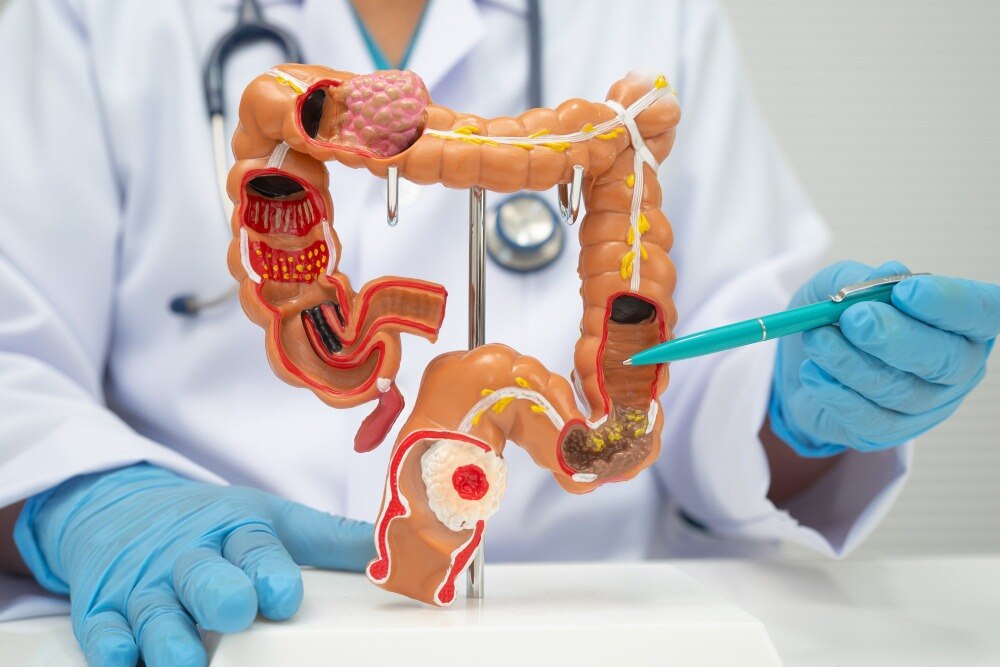
- Colonoscopy with biopsy confirms suspected colon cancer and shows where the tumour is located.
- Stage, tumour biology, overall health, and genetic findings guide treatment choices and follow-up.
Which symptoms require prompt evaluation, and why symptoms alone are not enough
Bright-red rectal bleeding requires prompt medical evaluation, especially when it recurs. Blood in stool that is mixed through the stool, a persistent change in bowel habits, narrower stools, unexplained iron-deficiency anaemia, abdominal pain, unexplained weight loss, and ongoing fatigue also need assessment.
These findings do not prove cancer, but they can reflect a tumour, bleeding polyp, inflammatory disease, or another condition.
| Situation | Appropriate next step | Why it matters |
|---|---|---|
| Symptoms such as rectal bleeding or anaemia | Arrange diagnostic assessment | Testing must find the source; do not wait for a screening invitation |
| No symptoms, average risk | Follow routine screening from age 45 | Screening looks for cancer or precancer before warning signs appear |
| No symptoms, higher risk | Discuss earlier or more intensive screening | A first-degree relative with colorectal cancer or advanced polyps, inflammatory bowel disease, Lynch syndrome, or familial adenomatous polyposis changes risk |
Early colon cancer symptoms can be absent, so waiting for symptoms is not a reliable screening strategy. A person can have a normal bowel pattern and still harbour an early tumour. Conversely, symptoms in a younger adult should not be dismissed as haemorrhoids or “too early” for cancer; younger age does not rule it out.
Seek medical advice promptly rather than repeating home stool tests or waiting for symptoms to resolve.
Who should be screened, and which test is the right starting point
Average-risk adults without symptoms should begin colon cancer screening at age 45. Screening is for finding cancer or precancerous polyps before symptoms appear; it is not a substitute for investigating bleeding, anaemia, pain, weight loss, or bowel changes.
| Option | What it detects | Preparation and invasiveness | Main trade-off |
|---|---|---|---|
| Annual FIT test | Hidden blood in stool | No bowel cleansing; collect a stool sample at home | Convenient and non-invasive, but it can miss bleeding polyps or cancers |
| Stool DNA-FIT every 1–3 years | Hidden blood plus abnormal DNA associated with colorectal cancer | Home stool collection without bowel cleansing | Detects more potential abnormalities but produces more positive results requiring colonoscopy |
| Colonoscopy every 10 years | Polyps, cancer, and the entire colon’s lining; polyps can be removed immediately | Split-dose bowel preparation, sedation, and an instrument passed through the rectum | Most complete examination, but invasive and carries small bleeding, perforation, and sedation risks |
| CT colonography every 5 years | Structural abnormalities, larger polyps, and masses using CT imaging | Bowel preparation; no sedated scope, but the colon is inflated with gas | Less invasive than colonoscopy, but radiation and a follow-up colonoscopy are needed for suspicious findings |
A positive FIT or stool DNA-FIT is not a cancer diagnosis, but it does require diagnostic colonoscopy. Repeating the stool test delays source-finding and does not complete screening.
If you have a first-degree relative with colorectal cancer or advanced polyps, inflammatory bowel disease, Lynch syndrome, familial adenomatous polyposis, or a strong family history, discuss earlier or more intensive screening with your clinician.
How doctors confirm suspected colon cancer and prepare you for colonoscopy
Doctors begin with your medical history, including bleeding, bowel changes, medicines, family history, and prior colon tests, followed by an abdominal and rectal examination. Blood tests include a complete blood count, ferritin, serum iron, and iron studies to detect anaemia and assess iron deficiency.
Screening colonoscopy and diagnostic colonoscopy serve different purposes:
| Procedure | Who receives it | Main purpose |
|---|---|---|
| Screening colonoscopy | An asymptomatic person due for routine screening | Look for polyps or cancer before symptoms appear |
| Diagnostic colonoscopy | Someone with symptoms or an abnormal screening result | Find the cause, inspect the entire colon, and take tissue samples |
A diagnostic colonoscopy requires careful colonoscopy preparation. Follow the prescribed split-dose bowel-cleansing solution exactly; incomplete cleansing can hide a tumour or polyp. During the instructed interval, drink only approved clear liquids. Ask the clinical team how to manage anticoagulants, diabetes medicines, iron tablets, and supplements rather than stopping them yourself.
Arrange an adult escort and transport home after sedation.
A pathologist examines the colon cancer biopsy and reports whether cancer is present, along with features that guide treatment. CT staging scans of the chest, abdomen, and pelvis look for spread and help identify suspicious lesions. Imaging cannot confirm cancer: pathology does.
A biopsy also does not establish the complete stage if the primary tumour and regional lymph nodes have not been fully assessed.
How stage and tumour biology determine colon cancer treatment
Colon cancer treatment by stage follows how far the disease has spread, not tumour size alone. Localized cancer usually requires surgery to remove the tumour and regional lymph nodes. Pathology reports margins, depth of penetration, lymphovascular invasion, perineural invasion, differentiation, and node count; examining at least 12 nodes is a common staging-quality benchmark.
Stage II colon cancer does not automatically require chemotherapy. Doctors weigh:
- T4 invasion, obstruction, or perforation
- Fewer than 12 examined nodes
- Lymphovascular or perineural invasion, poor differentiation, or other high-risk pathology
- Molecular findings and the likely benefit versus treatment toxicity
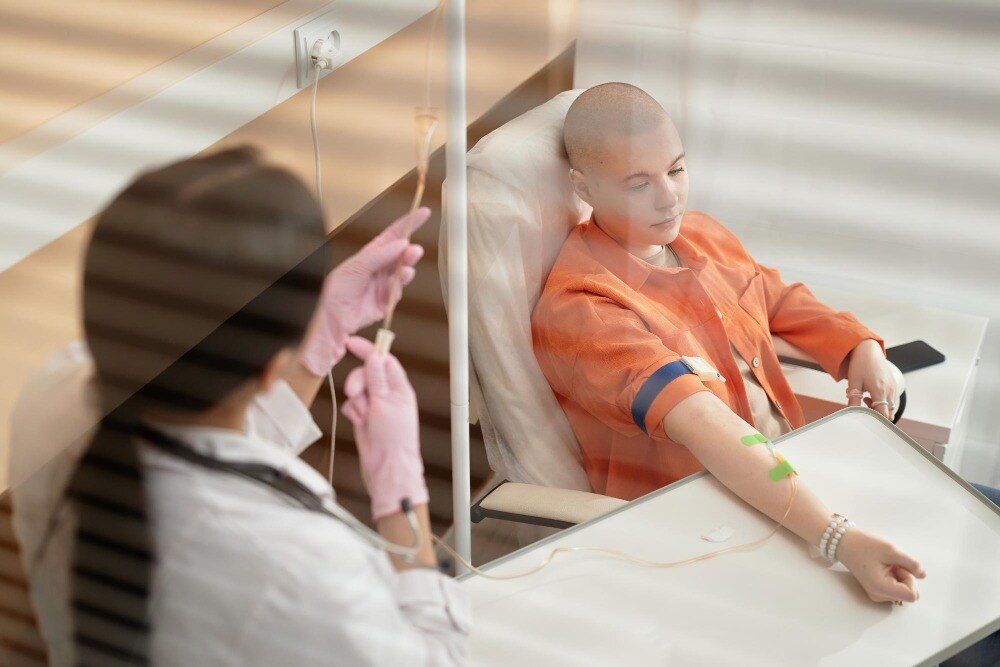
Stage III colon cancer usually receives postoperative chemotherapy if you are medically fit, because microscopic disease can remain after complete surgery. FOLFOX and CAPOX are common regimens given for 3 or 6 months, with duration linked to recurrence risk and regimen; oxaliplatin-related numbness and tingling can become permanent, so benefit must be balanced against neuropathy.
Colon and rectal cancers need different planning. Rectal cancer often requires pelvic MRI and preoperative chemoradiation or total-neoadjuvant therapy, approaches not routine for most colon cancers.
Metastatic disease usually needs systemic treatment guided by MMR/MSI, RAS, BRAF V600E, and HER2 testing. Results can direct immunotherapy, anti-EGFR therapy, BRAF-targeted combinations, or HER2-directed treatment. Limited liver or lung metastases may still be assessed for surgery or ablation by a multidisciplinary team.
What follow-up, genetic assessment, and specialist support involve after treatment
After curative-intent treatment, colon cancer surveillance is active, not symptom-watching. Your plan includes:
- Scheduled history and examination
- Carcinoembryonic-antigen (CEA) testing when appropriate
- CT imaging based on recurrence risk
- Colonoscopy
Timing depends on stage, treatment, findings, and comorbidities. Surveillance reduces missed recurrence but cannot guarantee early detection.
Circulating-tumour-DNA testing can add prognostic information after surgery, but a negative result does not prove that microscopic disease is absent. It does not replace pathology, imaging, colonoscopy, or clinician-directed treatment.
Ask about genetic counselling and germline testing after a young diagnosis, multiple polyps or colorectal cancers, a Lynch-associated cancer, or a strong family history. A normal family history does not exclude inherited risk. A pathogenic result can change your surveillance and treatment and give relatives a reason to seek targeted testing or earlier screening.
Joined-up care connects:
- Medical oncology and surgery
- Pathology and radiology
- Nutrition and symptom management
- Rehabilitation and family support
This coordination helps manage neuropathy, bowel changes, fatigue, nutrition problems, and emotional strain while maintaining a clear colon cancer support plan. In Dombivli, Dr Avinash Talele-Best cancer specialist can help you discuss stage, biomarkers, treatment goals, side effects, and an individualized surveillance plan.
Related services
Colon Cancers Colon cancer is a type of cancer that begins in the large intestine. The colon is the final part of the digestive tract. View service → |
GI Cancers Gastro-Intestinal Oncology & HPB DMG deals with malignancies related to the Gut/Intestine, Liver, Stomach, Pancreas, Gall Bladder, Oesophagus, Colon,... View service → |
Frequently asked questions
Which colon cancer symptoms require prompt medical evaluation?
Seek evaluation for recurring bright-red rectal bleeding, blood mixed through the stool, persistent bowel changes, narrower stools, unexplained iron-deficiency anaemia, abdominal pain, unexplained weight loss, or ongoing fatigue.
Who should be screened for colon cancer, and which test comes first?
Screening depends on age, personal history, family history, and inherited risk. Average-risk adults can discuss a stool-based test or colonoscopy with a clinician; higher-risk people need an earlier, personalised plan.
How do doctors confirm suspected colon cancer?
Doctors usually use colonoscopy to inspect the colon and take a biopsy. Pathology confirms whether cancer is present, while scans and blood tests help assess its extent and prepare treatment.
How does stage affect colon cancer treatment?
Treatment depends on whether cancer is confined to the bowel, has reached nearby lymph nodes, or has spread to distant organs. Surgery, chemotherapy, targeted therapy, immunotherapy, or combinations may be used.
What happens after colon cancer treatment?
Follow-up includes scheduled examinations, blood tests, imaging or colonoscopy when indicated, review of symptoms, and assessment for recurrence, treatment effects, nutrition, and rehabilitation.
Related services
Palliative Chemotherapy In the last stages of cancer when other treatment modalities are unsuccessful, we strive to provide a decent, pain-free quality of life with... View service → |
Breast Cancers Breast cancer is cancer that forms in the cells of the breasts. After skin cancer, breast cancer is the most common cancer diagnosed in women. View service → |
Myeloma Cancers Multiple myeloma is a cancer that forms in a type of white blood cell called a plasma cell. View service → |