The right setting depends on your chemotherapy protocol, current health, expected side effects and how quickly you can reach emergency care—not simply on the cancer diagnosis. By comparing clinical suitability, treatment logistics, safety backup and local access, you can discuss a setting-specific plan with your oncology team.
Key takeaways
- Choose daycare when your condition, blood tests and treatment protocol support same-day care.
- Ask how the center handles infusion reactions, emergencies and transfer to hospital.
- Hospital treatment suits intensive regimens, unstable health or complications needing overnight monitoring.
- Compare oncologist access, observation time, emergency equipment and travel distance before choosing.
What is the practical difference between daycare and hospital chemotherapy?
The choice depends on your chemotherapy protocol, current stability and expected complications—not on the cancer diagnosis alone. A daycare chemotherapy center in Dombivli suits standard intravenous treatment when your vital signs, blood counts, kidney and liver function are acceptable, the infusion and observation period fit a same-day visit, and emergency support is immediately available.
| Setting | Designed for | When it fits |
|---|---|---|
| Daycare chemotherapy | Scheduled infusions with limited observation | Stable patient, manageable allergy risk, no need for overnight hydration or monitoring |
| Hospital chemotherapy | Treatment needing prolonged supervision or rapid intervention | Continuous or multi-day infusion, high-dose chemotherapy, intensive hydration, severe prior reaction or unstable medical condition |
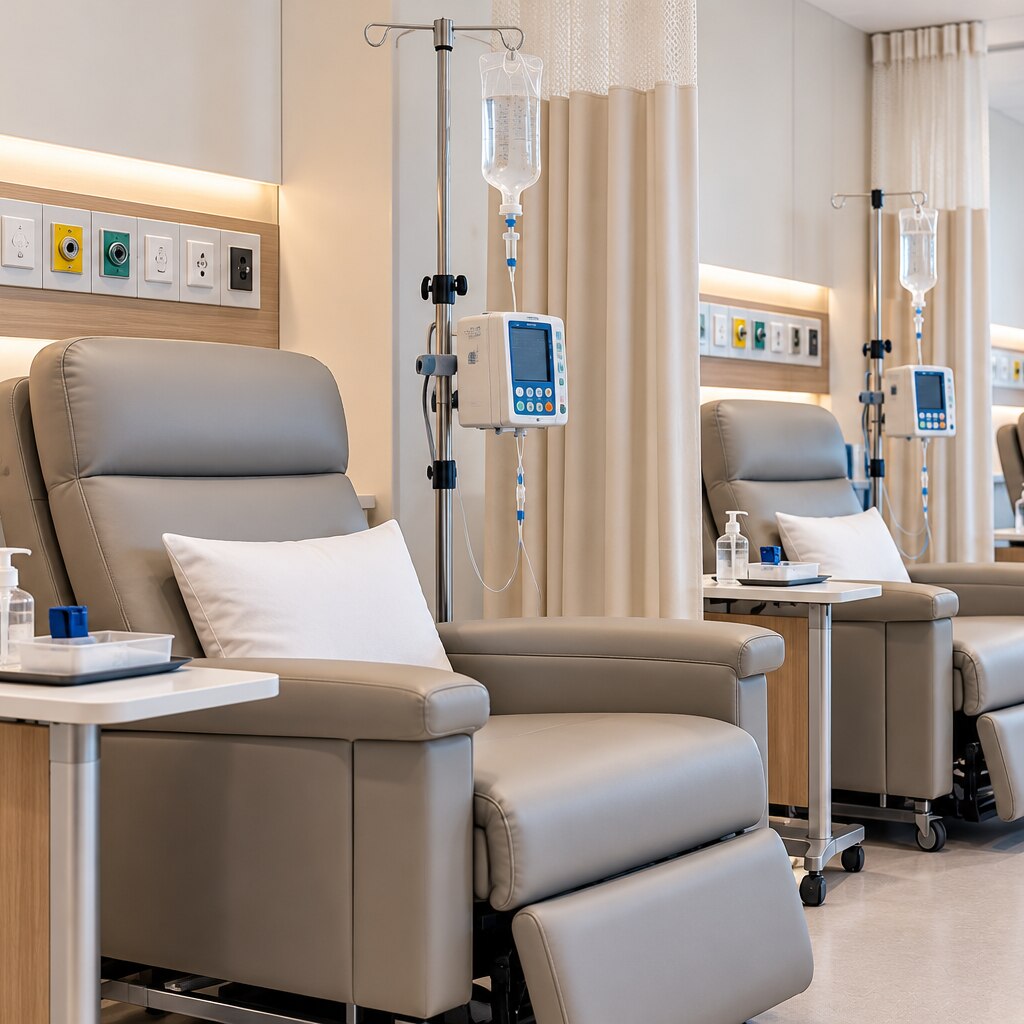
Daycare chemotherapy versus hospital treatment also involves practical safety. Confirm that the center has resuscitation equipment, a doctor available during treatment, ambulance access and a defined route for same-day hospital admission. Ask whether the oncologist reviews every cycle and whether the pharmacy independently verifies each drug and stores it correctly.
Hospital chemotherapy in Dombivli is safer when you have neutropenic fever or severe infection, uncontrolled vomiting, dehydration, breathing difficulty, unstable blood pressure, severe pain, bleeding or altered consciousness. A hospital is also appropriate when kidney or liver function is significantly abnormal, blood counts are too low, or the regimen requires prolonged observation.
Do not judge the visit by infusion time alone. Premedication, laboratory review, drug preparation and post-infusion observation can keep you at a daycare unit for several hours, so arrange transport, food and home support.
How does an oncologist decide if daycare chemotherapy is safe?
An oncologist approves daycare chemotherapy when you are clinically stable, the planned regimen does not require overnight monitoring, and rapid help is available if toxicity occurs. Your cancer diagnosis alone does not decide the setting.
- Vital signs: Check blood pressure, pulse, temperature, oxygen level and current symptoms before treatment.
- Blood counts: Review haemoglobin, white-cell count, neutrophils and platelets. Unsafe results can require a delay or dose change.
- Kidney and liver function: Creatinine, estimated kidney filtration, bilirubin and liver enzymes help determine whether your body can clear the drugs safely.
- Treatment protocol: Confirm the infusion duration, hydration requirement and expected observation time. Continuous infusions, multi-day treatment or prolonged monitoring usually need hospital planning.
- Reaction history: Review previous allergy, infusion reaction, breathing difficulty, blood-pressure drop or delayed toxicity.
- Medicines and conditions: Check anticoagulants, diabetes, heart disease, infection symptoms, vomiting and other problems that could increase risk.
- Home support: Confirm transport, a responsible adult when needed, and clear instructions for urgent symptoms.
A daycare chemotherapy center in Dombivli should also have trained staff, independent pharmacy verification, correct drug storage, resuscitation equipment, an immediately available doctor, ambulance access and a defined same-day admission route. Ask whether blood products, imaging and hospital beds are accessible if your condition changes.
Daycare chemotherapy versus hospital treatment is therefore a clinical and logistics decision. Reliable support at home can suit a stable patient receiving a standard intravenous regimen; unstable observations, serious prior reactions or inadequate emergency backup make hospital care safer.
When is hospital chemotherapy safer or necessary?
Admission is safer when your condition is unstable, your test results make treatment risky, or the protocol needs monitoring beyond a few hours. Hospital chemotherapy in Dombivli provides access to admission, emergency treatment, blood products and intensive care if a complication develops.
| Situation | Why hospital care is safer | Typical examples |
|---|---|---|
| Uncontrolled symptoms | You may need rapid treatment, fluids or oxygen | Neutropenic fever, severe infection, repeated vomiting, dehydration, breathing difficulty, uncontrolled pain, bleeding or altered consciousness |
| Unsafe test results | Chemotherapy can worsen organ injury or infection risk | Very low neutrophil or platelet counts, major anaemia, acute kidney injury, abnormal liver function, or serious sodium, potassium or magnesium disturbance |
| High-risk administration | The team needs prolonged observation or immediate intervention | Previous severe allergy, unstable blood pressure, high risk of anaphylaxis, intensive hydration, or a drug that can damage the heart, kidneys or bladder |
| Inpatient protocol | The schedule itself exceeds routine outpatient monitoring | Continuous infusion, multi-day chemotherapy, high-dose treatment, or a regimen requiring overnight observation |
The daycare chemotherapy versus hospital decision also depends on your vital signs, previous reactions, other illnesses and home support. A stable patient with acceptable blood counts, kidney and liver results, and a standard short infusion may receive treatment in daycare; a patient needing frequent blood tests, repeated fluid replacement or rapid dose adjustment may not.
Ask where you will go if fever reaches 38°C, breathing changes, or vomiting prevents fluids after treatment. A credible same-day admission pathway matters.
What should you expect during a daycare chemotherapy visit?
Plan for several hours, even when the chemotherapy itself takes only 30 minutes. Premedication, blood-test review, pharmacy preparation, infusion time and observation all add to the visit.
- Before treatment, staff check your symptoms, weight, temperature, blood pressure, medicines and recent blood counts. Kidney and liver results are reviewed against the protocol; unsafe results can lead to a delay or dose change.
- The oncologist confirms the cycle and dose, while the pharmacy completes an independent check and prepares the drug. You receive premedicines when required, such as an anti-nausea drug or an allergy-prevention medicine.
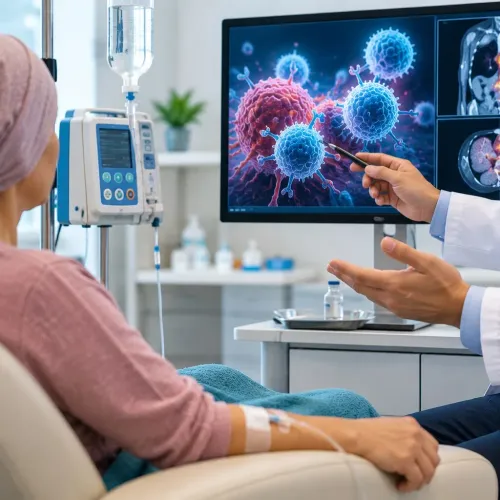
- During infusion, nurses monitor you for pain, breathlessness, rash, chills, dizziness or blood-pressure changes. Some taxanes and monoclonal antibodies cause reactions during treatment or soon afterward, so staff must be able to stop or slow the infusion, give emergency medicines and arrange higher-level care.
- After the dose, remain for the observation period set for your drug. Ask a daycare chemotherapy center in Dombivli how long you will be watched and whether a doctor, resuscitation equipment, ambulance and same-day hospital admission are immediately available.
Arrange transport rather than driving if treatment or premedication causes drowsiness, weakness or dizziness. Keep prescribed medicines, fluids, light food and the oncology team’s phone number ready at home, and have an adult caregiver available after a first dose or regimen change.
Ask the chemotherapy center near Dombivli which fever, breathing or vomiting symptoms require an urgent call or hospital visit.
How should you compare a chemotherapy center near Dombivli with a hospital?
The safer choice is the facility that matches your regimen and can reach higher-level care quickly, not the one labelled “daycare” or “hospital.” Compare a chemotherapy center near Dombivli with a hospital using the same operational questions.
| Option | Check before choosing | Why it matters |
|---|---|---|
| Daycare chemotherapy center | Oncologist reviews every cycle; blood counts, kidney and liver function, symptoms, weight and vital signs are checked; pharmacy independently verifies each dose and stores medicines correctly | A stable patient receiving a planned outpatient regimen can avoid admission without sacrificing treatment safety |
| Hospital chemotherapy | Blood products, imaging, intensive hydration, overnight monitoring and inpatient protocols are available | Continuous infusions, multi-day regimens, high-dose treatment or prolonged observation require resources a small unit may not have |
| Either facility | On-site resuscitation equipment, a doctor immediately available, ambulance access and a defined same-day admission route | Severe allergy, breathing difficulty, unstable blood pressure or other sudden toxicity needs rapid escalation |
Ask who stops an infusion, supplies emergency medicines and contacts the receiving hospital. Confirm how long you will be observed after your specific drug, since taxanes and monoclonal antibodies can trigger reactions during or shortly after administration.
For daycare chemotherapy center or hospital treatment in Dombivli, also measure the journey: traffic reliability, travel time, an accompanying adult, parking, food, medicines and a plan for urgent return. Dr Avinash Talele-Best cancer specialist can help you compare these safeguards against your protocol and medical history rather than choosing by distance alone.
Frequently asked questions
What is the difference between daycare and hospital chemotherapy?
Daycare chemotherapy provides planned treatment, monitoring and discharge on the same day. Hospital chemotherapy offers access to inpatient beds, overnight observation and broader support for complex or high-risk treatment.
How does an oncologist decide if daycare chemotherapy is safe?
The oncologist reviews your chemotherapy protocol, previous reactions, vital signs, blood counts, kidney function, liver function and the expected infusion and observation time. Daycare is appropriate when these factors support safe same-day treatment and emergency support is available.
When is hospital chemotherapy safer or necessary?
Hospital chemotherapy is safer when you are medically unstable, need intensive monitoring, have a high risk of severe infusion reactions, require prolonged treatment or may need overnight care for complications.
What should you expect during a daycare chemotherapy visit?
Expect a pre-treatment assessment, blood-test review, medication checks, intravenous access, premedication when prescribed, chemotherapy infusion and observation afterward. Staff will tell you which symptoms require urgent attention after discharge.
How should you compare a chemotherapy center near Dombivli with a hospital?
Compare oncologist availability, emergency medicines and equipment, observation arrangements, laboratory access, transfer links, infection-control practices, appointment capacity and travel time from your home.
Keywords