
A suspected cancer needs more than symptoms or a scan: tissue findings, disease extent, tumour biology, and your overall health all shape the diagnosis and plan. By the end, you will know which decisions a medical oncologist makes, how other specialists fit into care, and what to expect from treatment, monitoring, and follow-up.
Key takeaways
- A cancer referral does not confirm cancer; your oncologist identifies missing evidence.
- Treatment depends on cancer type, stage, tumour findings, and your overall health.
- Ask how side effects will be monitored and which symptoms need urgent attention.
- Follow-up care can include surveillance, rehabilitation, nutrition, and symptom management.
What a Medical Oncologist Does After a Cancer Referral
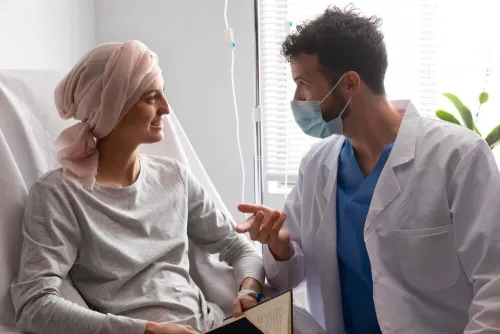
A cancer referral does not confirm cancer. At the first appointment, the medical oncologist reviews why you were referred, your symptoms, medical history, previous reports, medicines, family history, and overall health, then performs a physical examination. This information helps identify which evidence is missing.
The diagnostic work-up usually follows these steps:
- Review imaging such as a CT scan, MRI, ultrasound, or PET scan to locate an abnormal area and select the safest route for sampling.
- Arrange or review a biopsy or cell sample. A pathologist examines the tissue under a microscope to determine whether cancer is present.
- Use pathology tests, including immunohistochemistry, to identify the tumour’s subtype and markers that separate one cancer from another.
- Order blood tests or additional molecular testing when the suspected cancer, tissue findings, or treatment decisions require them.
A scan can show a mass, but it cannot prove that the mass is cancer. The diagnosis is confirmed when pathology or another appropriate cell or tissue examination identifies malignant cells; blood and bone-marrow testing follows a different process for some blood cancers.
The oncologist then checks that the pathology matches the imaging and clinical findings. If the results conflict, the case may be reviewed with a pathologist or multidisciplinary team before treatment is recommended.
How Cancer Type, Stage, and the Care Team Shape the Plan
A cancer’s extent is determined by matching tissue evidence with where disease is found—not by symptoms or a scan alone. The oncologist reviews biopsy and pathology, including immunohistochemistry to identify the subtype, then combines blood tests, imaging, examination, and medical history. Formal staging records tumour size or local invasion, lymph-node involvement, and distant spread.
Molecular testing or genomic testing on tumour tissue or blood can identify alterations or immune markers relevant to treatment. A matching biomarker does not guarantee response, so stage, tumour biology, overall health, and treatment goals still shape the plan.
The team changes according to the cancer’s location, extent, and treatment needs:
| Role | Main question | When involved |
|---|---|---|
| Medical oncologist | Which whole-body treatment fits? | When cancer requires systemic treatment or coordinated planning |
| Surgical oncologist | Can the tumour be removed safely? | When surgery could diagnose, control, or remove local disease |
| Radiation oncologist | Can radiation control disease in a specific area? | When local radiation could treat, shrink, or relieve symptoms |
| Multidisciplinary tumour board | How should the specialists coordinate? | When the case is complex or requires combined treatments |
At a multidisciplinary tumour board, medical, surgical, and radiation oncologists review the evidence with radiologists and pathologists. Nurses, pharmacists, genetic professionals, rehabilitation specialists, or psychosocial clinicians join when their expertise affects the plan. This coordination prevents one treatment decision from ignoring another.
How Treatment Choices Are Matched to the Person and the Tumour
The choice starts with the tumour’s biology and the person’s ability to receive treatment, not with a drug name. The oncologist weighs tumour sensitivity, biomarkers, cancer stage, organ function, performance status, pregnancy status, previous treatment, and patient goals.
| Option | How it works | When it applies |
|---|---|---|
| Local treatment | Surgery or radiation treats a defined area | Use for a removable or focused tumour, sometimes after systemic treatment |
| Chemotherapy | Drugs damage or destroy rapidly dividing cells throughout the body | Use when cancer is sensitive to these drugs, including before or after local treatment |
| Immunotherapy | Helps the immune system recognise and attack cancer | Consider it when tumour features support benefit; a biomarker does not guarantee response |
| Targeted therapy | Blocks a specific molecular alteration or pathway | Use when biomarker testing identifies a matching target |
| Endocrine therapy | Blocks hormones or their effects | Use for hormone-sensitive cancers |
| Cellular therapy | Uses modified or selected immune cells to attack cancer | Consider it for selected cancers after specialised eligibility review |
| Clinical trials | Tests a treatment or treatment strategy under informed consent | Consider it before standard options are exhausted, if eligibility fits |
Systemic treatment may aim to cure, control incurable disease, relieve symptoms, or reduce recurrence. Neoadjuvant therapy shrinks cancer before local treatment; adjuvant therapy lowers recurrence risk after surgery or radiation.
The plan can change when scans, pathology, or side effects change the risk-benefit balance. A clinical trial may require specific cancer features, laboratory values, prior treatments, and performance status; consent must explain potential benefits, risks, and alternatives. When pregnancy is possible, discuss fertility and fetal-safety issues before treatment begins.
How the Oncologist Monitors Treatment and Manages Side Effects
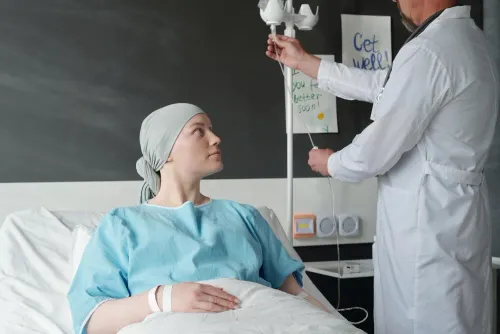
Treatment monitoring continues throughout systemic therapy. The oncologist reviews symptoms, examination findings, blood tests, and scans to judge whether treatment is working and to detect treatment toxicity before it becomes dangerous. Results may lead to dose changes, a treatment delay, supportive medicines, or a different drug.
- Report a fever of 38°C or higher, chills, unusual bleeding, severe weakness, or signs of infection promptly; low blood-cell counts can make these emergencies.
- Contact the oncology team for persistent nausea and vomiting, inability to keep fluids down, severe diarrhoea, dehydration, or rapidly worsening fatigue.
- Report painful mouth sores early, because they can prevent eating and drinking and may require mouth care, fluids, pain relief, or a treatment pause.
- Seek urgent evaluation for new breathlessness, chest pain, confusion, severe abdominal pain, or yellowing of the skin.
- During immunotherapy, report new rash, diarrhoea, cough, breathlessness, severe headache, vision changes, or extreme thirst; these can signal immune-related adverse effects affecting the skin, bowel, lungs, liver, or endocrine glands.
Immune-related adverse effects can appear after treatment has started or ended. The oncologist may hold immunotherapy and prescribe corticosteroids or other immune-suppressing treatment. Palliative care can join treatment at any stage, providing symptom management, pain control, emotional support, and practical help while cancer-directed therapy continues.
What Oncology Care Includes After Initial Treatment
A follow-up visit is not simply a scan: surveillance is timed according to the cancer, its recurrence risk, previous treatment, and changing health needs. The medical oncologist reviews results, examines new problems, and changes testing when symptoms raise concern about recurrence.
Survivorship planning addresses what happens after active treatment ends:
- Watch for recurrence and manage late effects caused by treatment.
- Arrange rehabilitation for problems affecting strength, movement, speech, swallowing, or daily activities.
- Provide family support and referrals for emotional, practical, or nutritional needs.
A family history or other inherited-risk pattern can justify genetic counselling and germline testing. Germline testing looks for an inherited cancer-predisposition variant that could change your screening and inform relatives. Tumour testing examines changes acquired by the cancer; those results may identify a treatment, so the two tests answer different questions.
If recurrence appears, the oncologist confirms what has changed, reassesses stage, and compares available treatments. When cancer cannot be cured, treatment may still control growth or relieve symptoms. Palliative care can begin alongside cancer-directed treatment, while hospice focuses on end-of-life care when cure-directed treatment is no longer the goal.
For patients in Dombivli, Dr Avinash Talele-Best cancer specialist can help coordinate these decisions with the wider care team.
Frequently asked questions
Does a referral to a medical oncologist mean I have cancer?
No. A referral does not confirm cancer. The oncologist reviews your symptoms, history, examination findings, and available reports to identify what evidence is still needed.
How does a medical oncologist choose cancer treatment?
The plan is matched to the cancer type, stage, tumour findings, previous treatment, overall health, and your priorities.
How does an oncologist monitor treatment and side effects?
The oncologist uses consultations, examinations, reports, and treatment monitoring to assess response, identify side effects, and adjust care when needed.
What does oncology care include after initial treatment?
After initial treatment, care can include surveillance, symptom management, rehabilitation, nutrition support, and ongoing help for you and your family.