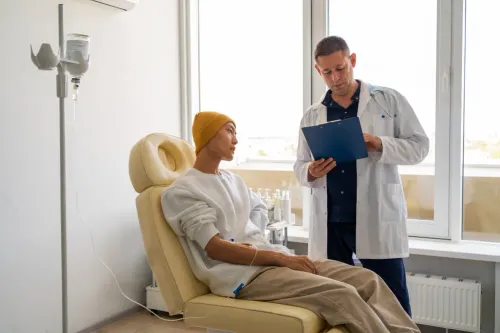

Cancer treatment has expanded beyond conventional approaches such as surgery, chemotherapy and radiation therapy. Immunotherapy for Cancer is one of the important developments in modern oncology and is now used for selected patients with several types of cancer.
Rather than directly attacking cancer in exactly the same way as chemotherapy, immunotherapy helps the immune system act against cancer. However, it is not suitable for every cancer or every patient.
How Does Immunotherapy Work?
The immune system normally identifies and responds to abnormal cells. Cancer cells, however, can develop ways of avoiding or suppressing immune responses.
Certain immunotherapies are designed to interfere with these mechanisms and make it easier for immune cells to recognise or attack cancer.
One major category is immune checkpoint inhibitors. Immune checkpoints normally help regulate immune activity. Some cancers exploit these pathways to reduce the immune response against them. Checkpoint inhibitor medicines can block specific checkpoint signals and allow immune cells to respond more effectively.
Is Immunotherapy Suitable for Every Cancer?
No.
Although immunotherapy is used in the treatment of several cancers, eligibility depends on multiple factors. The cancer type, stage, previous treatments, tumour characteristics, biomarkers and overall health may influence whether a particular immunotherapy is appropriate.
This distinction is important for patients in Dombivli and surrounding areas who may hear about a newer cancer treatment and assume it is automatically better than chemotherapy.
The most appropriate treatment is the one supported by the characteristics of the individual cancer and the patient's clinical situation.
Why Can Biomarker Testing Be Important?
Some modern cancer treatments depend heavily on what is happening at a molecular level within the tumour.
Depending on the cancer, doctors may recommend tests that look for particular proteins, genetic alterations or other biomarkers. Results can help determine whether certain therapies are likely to be relevant.
This is one reason oncology has increasingly moved towards personalised treatment planning rather than applying identical treatment to everyone with the same broad cancer diagnosis.
What About Side Effects?
Immunotherapy has a different side-effect profile from conventional chemotherapy.
Because treatment can stimulate immune activity, the immune system can sometimes affect normal organs and tissues. The National Cancer Institute notes that immunotherapy-related side effects can occur when an activated immune system also acts against healthy tissues.
Patients should therefore report new or unusual symptoms promptly during treatment. Monitoring remains an important part of immunotherapy care.
Discussing Immunotherapy With an Oncologist
Patients consulting DR.Avinash Talele can discuss whether immunotherapy has an established role for their particular cancer and whether additional testing is required before making that decision.
For people travelling from Dombivli, Kalyan, Palava, Thane, Bhiwandi, Badlapur or Ambernath, it can be useful to bring pathology reports, previous treatment records and scan reports to the oncology consultation.
Immunotherapy represents an important treatment option, but it should not be viewed as a universal replacement for other therapies. For some patients it may be used alone, while for others it can be combined with chemotherapy or another form of treatment. Careful patient selection remains central to achieving an appropriate treatment plan.
Keywords