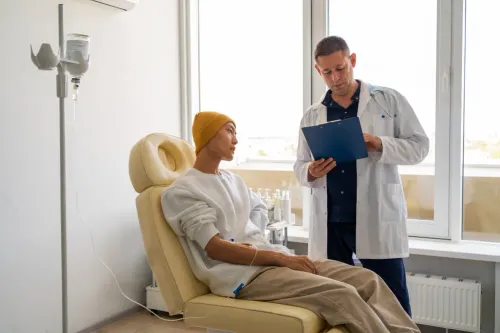
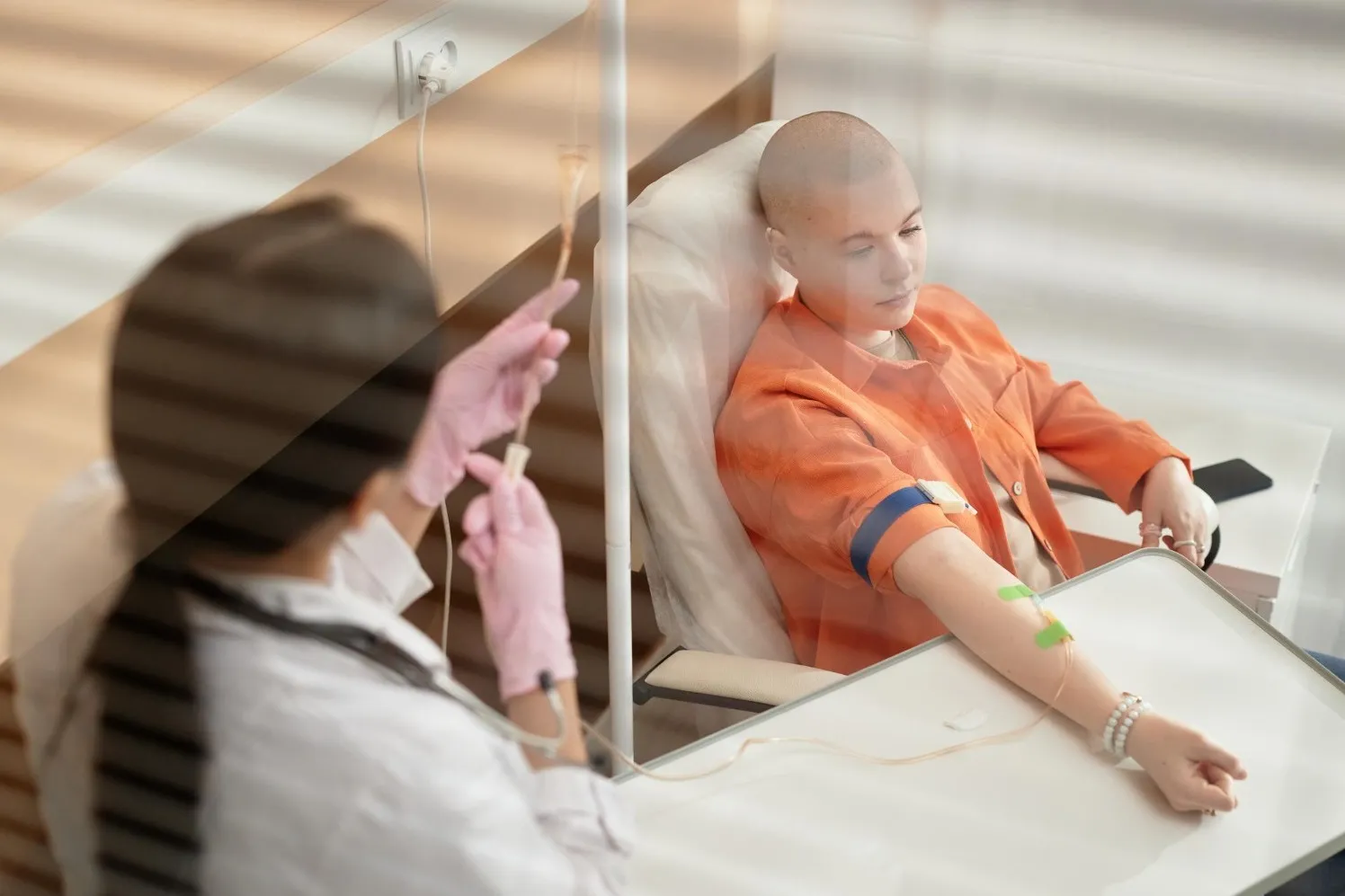
Cancer treatment does not always require hospital admission. Many chemotherapy regimens can be administered in an outpatient setting, allowing suitable patients to return home after their treatment and observation are completed. Day Care Chemotherapy can therefore make repeated cancer treatment more manageable for selected patients.
Whether outpatient treatment is appropriate depends on the chemotherapy regimen, infusion duration, patient's condition and level of monitoring required.
How Day Care Chemotherapy Works
A typical day-care visit may begin with a clinical assessment and review of recent blood investigations. The medical team needs to determine whether treatment can proceed safely according to the planned schedule.
Once the patient is cleared for treatment, medicines may be given before chemotherapy to help prevent or reduce certain expected reactions.
The chemotherapy infusion is then administered according to the prescribed protocol.
Throughout the session, healthcare staff monitor the patient. Once treatment and the required observation period are complete, suitable patients can usually return home with instructions for medicines, precautions and follow-up.
What Makes It Different From Hospital Admission?
The key distinction is that day-care patients do not normally remain in the hospital overnight.
This may offer practical benefits, particularly for patients undergoing repeated treatment cycles. It can reduce disruption to everyday life and allow recovery in familiar surroundings.
However, day-care treatment is not automatically appropriate for everyone. Certain regimens or medical situations may require longer monitoring or inpatient care.
What Should Patients Prepare?
Patients should follow the treatment centre's specific instructions. Useful preparation can include carrying current prescriptions, recent reports and details of any symptoms that developed after the previous cycle.
It is particularly important to tell the treating team about:
- Fever or signs of infection
- Persistent vomiting or diarrhoea
- New breathing difficulties
- Significant weakness
- Unusual bleeding
- New rashes or swelling
- Other unexpected symptoms
Cancer treatment can produce a range of side effects, and early communication helps the clinical team decide what evaluation or supportive care is required.
Is Day Care Chemotherapy Convenient for Local Patients?
For people travelling repeatedly from Dombivli, Kalyan, Palava, Bhiwandi, Thane, Badlapur or Ambernath, outpatient treatment can simplify logistics when it is clinically suitable.
Families can plan transportation around scheduled sessions rather than preparing for admission each time. Nevertheless, convenience should remain secondary to medical suitability.
Choosing the Appropriate Treatment Setting
Patients consulting DR.Avinash Talele can ask whether their prescribed regimen can be delivered through day-care care, how long individual sessions may take and what monitoring is required before returning home.
Chemotherapy treatment plans vary widely, so patients should avoid assuming that a friend's or relative's day-care schedule will apply to them.
The right treatment environment is determined by the medicine being administered, the patient's health and the level of observation required. When outpatient administration is clinically appropriate, day care chemotherapy can provide a structured way to receive cancer treatment without unnecessary overnight hospitalisation.
Keywords