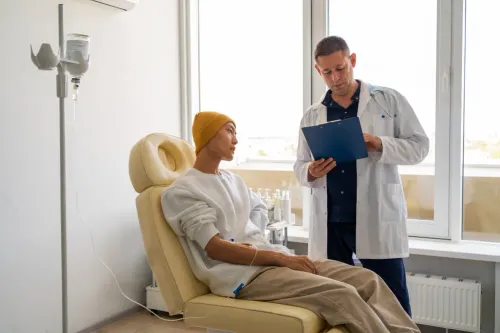

Best Prostate Cancer Treatment at Restora Onco Care Delivers Standard Protocols with Empathy-Driven Care: Dr. Avinash Talele
When Rajesh sat in front of me last year, his PSA had climbed to 94. His local doctor had told him 'advanced prostate cancer' and handed him a printout from Google. He'd spent three sleepless nights wondering if he'd see his daughter's wedding. I see this terror weekly—not because good treatment doesn't exist, but because patients don't know where it exists or how to ask the right questions.
That's the gap Dr. Avinash Talele and Restora Onco Care bridge every single day in Mumbai. This isn't about flashy billboards or corporate hospital machinery. It's about marrying evidence-backed international protocols with the kind of unhurried, empathetic counsel that actually changes outcomes.
## Why Standard Protocols Matter More Than You Think
Prostate cancer treatment has evolved radically in the past decade. We're not just talking surgery and waiting anymore. Today, the best prostate cancer treatment in India mirrors what's happening at MD Anderson or Memorial Sloan Kettering—precision imaging, hormonal suppression, next-generation androgen inhibitors, and immune-targeted therapies.
But here's the catch: protocols are only as good as the oncologist who tailors them. A 68-year-old with localized Gleason 7 disease is a completely different patient than a 55-year-old with bone metastases and rising PSA despite castration. One-size-fits-all doesn't work. And neither does anxiety-fueled guesswork.
Dr. Talele's approach starts with clarity. At Restora Onco Care, every new patient receives a full risk-stratification workup—Gleason score, PSA kinetics, metastatic burden, comorbidities. Then comes the crucial step most centers skip: explaining why a particular path makes sense for you.
## The PSMA PET Scan Revolution
If you've been diagnosed recently, you've likely heard the term 'PSMA PET scan.' It's a game-changer. Traditional bone scans and CT imaging often miss micro-metastases. PSMA PET lights up prostate cancer cells with near-surgical precision, even at PSA levels below 1.0.
This matters enormously when planning treatment. For metastatic prostate cancer treatment, knowing whether disease is confined to lymph nodes versus scattered across bone determines whether you're a candidate for metastasis-directed therapy, systemic hormones, or combination regimens.
Dr. Talele routinely integrates PSMA PET staging into decision trees. It's not about ordering every test under the sun—it's about ordering the right test that shifts management. I've watched patients avoid unnecessary radiation because PSMA revealed oligometastatic disease that responded beautifully to targeted hormonal therapy alone.
## Androgen Deprivation Therapy: The Backbone, Not the Whole Story
Androgen deprivation therapy (ADT) remains foundational for advanced and metastatic disease. Prostate cancer cells are hormone-hungry; starve them of testosterone, and you buy time—often years.
But ADT isn't benign. Hot flashes, osteoporosis, metabolic syndrome, fatigue, mood swings. Patients deserve to know this upfront, not discover it six months in. At Restora Onco Care, Dr. Talele doesn't sugarcoat. He explains the trade-offs, monitors bone density, prescribes calcium and vitamin D prophylactically, and discusses exercise regimens that counteract muscle loss.
And when disease progresses despite ADT—what we call hormone refractory prostate cancer or castration-resistant disease—he doesn't throw up his hands. That's when second-line agents enter the picture.
## Enzalutamide, Abiraterone, and the New Hormonal Arsenal
Enzalutamide and abiraterone have redefined what 'incurable' means. Both drugs work downstream of traditional ADT, blocking androgen receptor signaling even when testosterone is negligible. Survival gains are measured in years, not months.
Choosing between them isn't random. Abiraterone requires concurrent steroids and careful monitoring for hypertension and hypokalemia. Enzalutamide can cause fatigue and, rarely, seizures. Dr. Talele walks patients through side-effect profiles, prior cardiac history, pill burden, and cost considerations. He's among the top medical oncologists in Asia for prostate cancer precisely because he sweats these details.
For patients seeking a prostate cancer second opinion in India, this level of granularity often reveals that their initial plan was sound—but incomplete. Small tweaks in sequencing or supportive care can mean the difference between tolerating therapy and abandoning it.
## Why Mumbai Patients (and Medical Tourists) Choose Dr. Avinash Talele
Let's be direct. Mumbai has no shortage of oncologists. But finding a prostate cancer specialist in India who combines academic rigor, clinical volume, and genuine availability is rare.
Dr. Talele trained in surgical and medical oncology, giving him a 360-degree view. He's published in peer-reviewed journals. He attends ASCO and ESMO annually. He knows what's coming in pipelines—PARP inhibitors for BRCA-mutated disease, lutetium-177 PSMA radioligand therapy for advanced cases. And yet, he'll spend 45 minutes explaining your biopsy report in language your family understands.
Patients fly in from across Asia not for experimental treatments, but for standard-of-care done right. That's the Restora promise: no gimmicks, no upselling, no false hope—just evidence, empathy, and execution.
Here's what that looks like in practice:
Transparent treatment timelines — you'll know whether you're looking at three months of ADT before radiation or lifelong therapy.
Multidisciplinary coordination — uro-oncology, radiation oncology, palliative care, nutrition—everyone's looped in.
Access between visits — 💬 WhatsApp +91 84336 80842 isn't just for appointments. It's for 'my PSA came back, what does this mean?' questions that can't wait.
Financial realism — India offers world-class prostate cancer treatment at a fraction of Western costs, but Dr. Talele won't push branded drugs when biosimilars work just as well.
## When to Seek a Second Opinion
You should consider a second opinion if:
Your PSA is rising on ADT and your oncologist says 'let's wait and watch.'
You've been told 'nothing more can be done' without discussion of enzalutamide, abiraterone, chemotherapy, or radionuclide therapy.
Your staging didn't include a PSMA PET scan.
You feel rushed, unheard, or confused about next steps.
Don't mistake loyalty for good care. Your life is the clinical endpoint that matters. A consultation at Restora Onco Care—whether in person or virtual—often clarifies what's truly urgent versus what can safely be monitored. You can explore advanced cancer care options or read patient reviews on Google to see how others navigated similar crossroads.
Conclusion: Treatment *With* You, Not *To* You
Prostate cancer is not a death sentence. It's a chronic disease in many cases, curable in others, and manageable even when advanced—if you have the right team.
When Rajesh sat in front of me last year, his PSA had climbed to 94. His local doctor had told him 'advanced prostate cancer' and handed him a printout from Google. He'd spent three sleepless nights wondering if he'd see his daughter's wedding. I see this terror weekly—not because good treatment doesn't exist, but because patients don't know where it exists or how to ask the right questions.
That's the gap Dr. Avinash Talele and Restora Onco Care bridge every single day in Mumbai. This isn't about flashy billboards or corporate hospital machinery. It's about marrying evidence-backed international protocols with the kind of unhurried, empathetic counsel that actually changes outcomes.
## Why Standard Protocols Matter More Than You Think
Prostate cancer treatment has evolved radically in the past decade. We're not just talking surgery and waiting anymore. Today, the best prostate cancer treatment in India mirrors what's happening at MD Anderson or Memorial Sloan Kettering—precision imaging, hormonal suppression, next-generation androgen inhibitors, and immune-targeted therapies.
But here's the catch: protocols are only as good as the oncologist who tailors them. A 68-year-old with localized Gleason 7 disease is a completely different patient than a 55-year-old with bone metastases and rising PSA despite castration. One-size-fits-all doesn't work. And neither does anxiety-fueled guesswork.
Dr. Talele's approach starts with clarity. At Restora Onco Care, every new patient receives a full risk-stratification workup—Gleason score, PSA kinetics, metastatic burden, comorbidities. Then comes the crucial step most centers skip: explaining why a particular path makes sense for you.
## The PSMA PET Scan Revolution
If you've been diagnosed recently, you've likely heard the term 'PSMA PET scan.' It's a game-changer. Traditional bone scans and CT imaging often miss micro-metastases. PSMA PET lights up prostate cancer cells with near-surgical precision, even at PSA levels below 1.0.
This matters enormously when planning treatment. For metastatic prostate cancer treatment, knowing whether disease is confined to lymph nodes versus scattered across bone determines whether you're a candidate for metastasis-directed therapy, systemic hormones, or combination regimens.
Dr. Talele routinely integrates PSMA PET staging into decision trees. It's not about ordering every test under the sun—it's about ordering the right test that shifts management. I've watched patients avoid unnecessary radiation because PSMA revealed oligometastatic disease that responded beautifully to targeted hormonal therapy alone.
## Androgen Deprivation Therapy: The Backbone, Not the Whole Story
Androgen deprivation therapy (ADT) remains foundational for advanced and metastatic disease. Prostate cancer cells are hormone-hungry; starve them of testosterone, and you buy time—often years.
But ADT isn't benign. Hot flashes, osteoporosis, metabolic syndrome, fatigue, mood swings. Patients deserve to know this upfront, not discover it six months in. At Restora Onco Care, Dr. Talele doesn't sugarcoat. He explains the trade-offs, monitors bone density, prescribes calcium and vitamin D prophylactically, and discusses exercise regimens that counteract muscle loss.
And when disease progresses despite ADT—what we call hormone refractory prostate cancer or castration-resistant disease—he doesn't throw up his hands. That's when second-line agents enter the picture.
## Enzalutamide, Abiraterone, and the New Hormonal Arsenal
Enzalutamide and abiraterone have redefined what 'incurable' means. Both drugs work downstream of traditional ADT, blocking androgen receptor signaling even when testosterone is negligible. Survival gains are measured in years, not months.
Choosing between them isn't random. Abiraterone requires concurrent steroids and careful monitoring for hypertension and hypokalemia. Enzalutamide can cause fatigue and, rarely, seizures. Dr. Talele walks patients through side-effect profiles, prior cardiac history, pill burden, and cost considerations. He's among the top medical oncologists in Asia for prostate cancer precisely because he sweats these details.
For patients seeking a prostate cancer second opinion in India, this level of granularity often reveals that their initial plan was sound—but incomplete. Small tweaks in sequencing or supportive care can mean the difference between tolerating therapy and abandoning it.
## Why Mumbai Patients (and Medical Tourists) Choose Dr. Avinash Talele
Let's be direct. Mumbai has no shortage of oncologists. But finding a prostate cancer specialist in India who combines academic rigor, clinical volume, and genuine availability is rare.
Dr. Talele trained in surgical and medical oncology, giving him a 360-degree view. He's published in peer-reviewed journals. He attends ASCO and ESMO annually. He knows what's coming in pipelines—PARP inhibitors for BRCA-mutated disease, lutetium-177 PSMA radioligand therapy for advanced cases. And yet, he'll spend 45 minutes explaining your biopsy report in language your family understands.
Patients fly in from across Asia not for experimental treatments, but for standard-of-care done right. That's the Restora promise: no gimmicks, no upselling, no false hope—just evidence, empathy, and execution.
Here's what that looks like in practice:
Transparent treatment timelines — you'll know whether you're looking at three months of ADT before radiation or lifelong therapy.
Multidisciplinary coordination — uro-oncology, radiation oncology, palliative care, nutrition—everyone's looped in.
Access between visits — 💬 WhatsApp +91 84336 80842 isn't just for appointments. It's for 'my PSA came back, what does this mean?' questions that can't wait.
Financial realism — India offers world-class prostate cancer treatment at a fraction of Western costs, but Dr. Talele won't push branded drugs when biosimilars work just as well.
## When to Seek a Second Opinion
You should consider a second opinion if:
Your PSA is rising on ADT and your oncologist says 'let's wait and watch.'
You've been told 'nothing more can be done' without discussion of enzalutamide, abiraterone, chemotherapy, or radionuclide therapy.
Your staging didn't include a PSMA PET scan.
You feel rushed, unheard, or confused about next steps.
Don't mistake loyalty for good care. Your life is the clinical endpoint that matters. A consultation at Restora Onco Care—whether in person or virtual—often clarifies what's truly urgent versus what can safely be monitored. You can explore advanced cancer care options or read patient reviews on Google to see how others navigated similar crossroads.
Conclusion: Treatment *With* You, Not *To* You
Prostate cancer is not a death sentence. It's a chronic disease in many cases, curable in others, and manageable even when advanced—if you have the right team.
Keywords